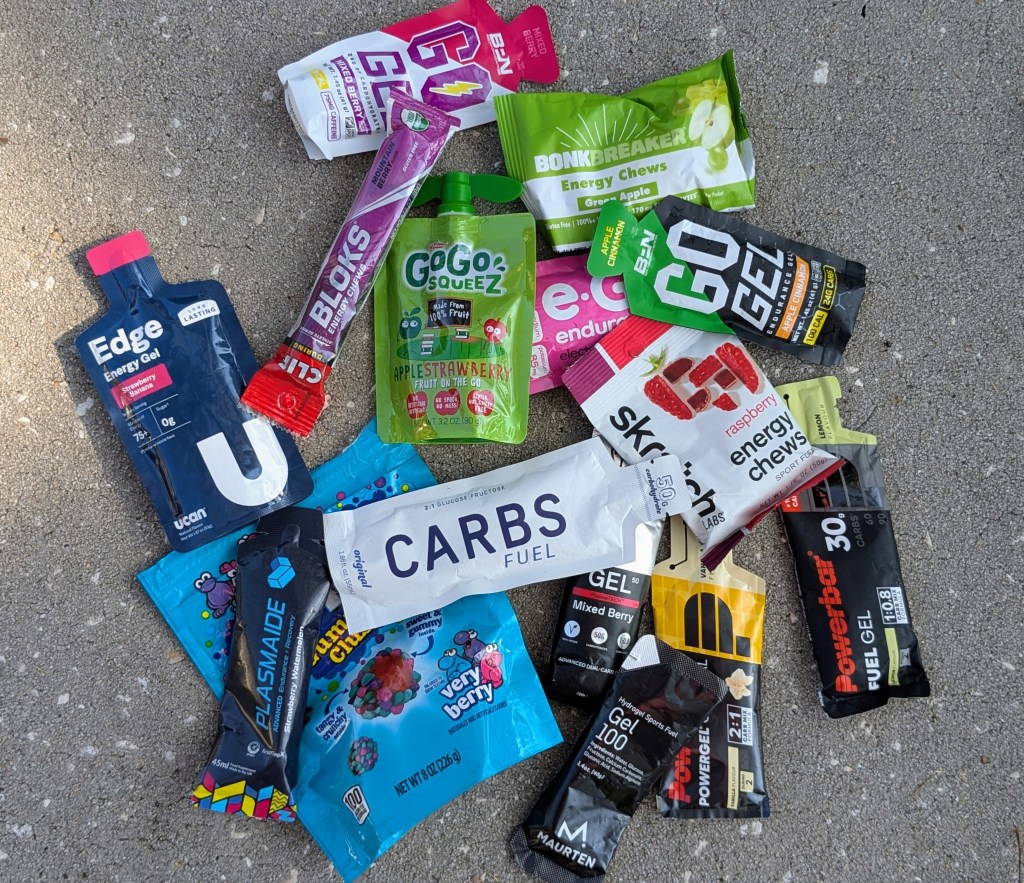
When you head out for a long run, do you have your fueling strategy dialed in? It’s easy to overlook this part of training when you’re focused on miles, pace, elevation, or your watch stats. But practicing your long-run fueling consistently is one of the most important things you can do to set yourself up for a strong race day. Let’s break it down.
Fueling Is Personal
One of the biggest reasons to practice fueling in training is simple: every runner is different. What works for your training buddy might not work for you. And while there are plenty of general guidelines on how many carbs per hour you should take in, your body’s ability to absorb and tolerate those carbs is highly individual.
Most guidelines recommend 30–60 grams of carbs per hour as a minimum, with trained runners sometimes able to take in 90 grams or more. But that’s not something you jump into overnight. Start small, pay attention to how your stomach feels, and gradually build up.
Your goal during long-run practice is to learn:
- What your body can digest
- How often you need to fuel
- How much is too much (or too little)
- Which fuel you actually like (this can make or break race day)
Gels, Drinks, Gummies… What’s the Best Option?
Here’s the good news: there’s no single “best” fuel. It comes down to preference and tolerance. Most running fuels are based on forms of glucose or fructose (or both). Combining the two allows you to absorb more carbs per hour. Popular options include:
- Sports drinks
- Gels
- Gummies or chews
If it tastes good and sits well? Great! Use it. But don’t overlook everyday foods either. Budget-friendly options like:
- Gummy candies
- Rice Krispie Treats
- Applesauce pouches
- Even table sugar mixed in water (a glucose/fructose combo!)
The key is easy-to-digest carbs that you can take in consistently.
Hydration Makes or Breaks Your Fueling
Hydration matters just as much as the fuel itself, especially for gels or solids. Carb absorption depends on osmolality, which basically means how concentrated your fuel is. If something is too concentrated (like a gel taken without water), your body can’t absorb it well and you may end up with the dreaded mid-run GI issues.
General rule:
- Gels, gummies, and solid foods: always take with water
- Sports drinks: provide carbs and hydration
Electrolytes also matter. You lose sodium, potassium, and magnesium in sweat, and you need them to maintain muscle and nerve function. Many sports nutrition products include electrolytes, but check your labels to make sure you’re covered.
Time Your Fuel Perfectly
Now that you’ve got your fuel lined up, what next? We suggest spacing it out evenly across your run. That could look like:
- Gel with a water fountain stop every 30 to 45 minutes
- A big sip from a bottle of sports drink every 10 – 15 minutes
- A mix of gels and sports drink spaced throughout the run
If you are training for a specific race, try to mimic race conditions. Will there be water stops every 2 miles? Try practicing taking a gel followed by water at 2 mile intervals. Will a certain sports drink be on course? Train with it now.
Practice What You’ll Do on Race Day
There’s no single “right” way to fuel a long run. Each runner absorbs and tolerates carbohydrates differently, which is exactly why you need to practice. The more consistent you are in training, the smoother race day will go. Dial in your plan during long runs so you can execute it confidently when it matters most.
Want Personalized Help? Let’s Coach You to Your Best Race
If you’re struggling to figure out what works, or you keep hitting the wall late in your long runs, coaching can make a huge difference. With science-based training plans and daily communication, we help our athletes fine-tune both training and fueling so they show up confident on race day.
Ready to train smarter? Learn more about our coaching programs: Coaching & Training Plans
Get our best tips and training advice to help you run better and faster. Subscribe to get weekly Training Tips delivered to your inbox.
 Fast Pack Running
Leave a comment