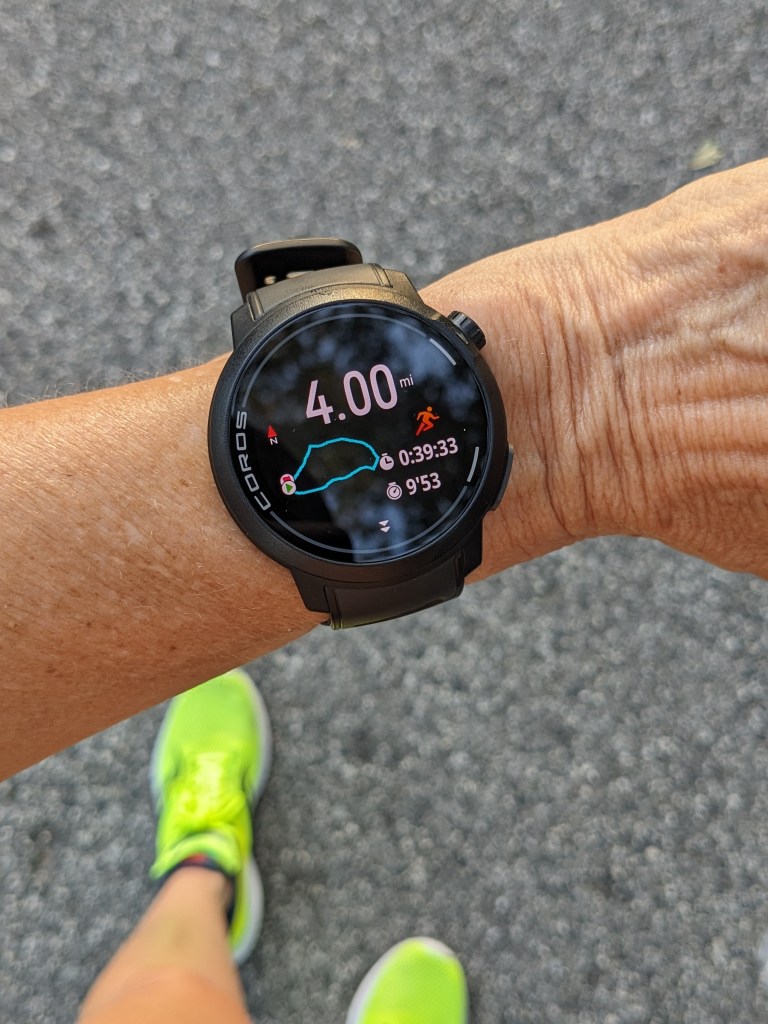
Look at any runner, and you’re likely to see a GPS watch on their wrist. Whether it’s a Garmin, Apple, Coros, or other watch, they are a staple among most runners. And while we think they are a great tool for your running, there’s a huge benefit in learning how to run and pace WITHOUT using your watch.
Tune Into Your Body First
While GPS watches can be a helpful tool for letting runners know how fast they’re going, where we grow most in our running skills is by focusing on effort and learning to associate intensity levels with a certain pace. Muscle memory is an important factor here, where the repetitive movement in running allows the body to get a greater sense of how a certain speed feels. With enough practice of tuning into our bodies and paying attention to how certain paces feel, we can gauge pace through these mechanisms rather than paying attention to a watch screen and trying to get it to read a certain number.
Try this on your next run:
- Decide a pace you want to run
- DO NOT look at your watch
- Pay attention to how your body is feeling, your cadence, & your breathing
- Check the watch once you are settled in to your pace to see where you are at
This may take a little practice at first, but the more you tune into your body FIRST and check the pace on your watch second, the better you will be at pacing yourself by feel.
Your GPS Isn’t Always Right
GPS watches are very good at what they do, but they are not always 100% accurate, especially if there is a lot of tree coverage or tall buildings on your running route. It’s also difficult for them to dial into the correct pace on short distances (say, 400 meter repeats). It’s a good idea to know what your paces FEEL like so that you can run without relying on the GPS at times when it can be inaccurate. This way if your watch is off, your workout won’t be.
Your Body Responds To Effort
Once you know how your pace should feel, you can use this knowledge to adjust your paces on days where the conditions aren’t ideal. Running improvements come from stressing the body in appropriate efforts, not just hitting certain numbers. Therefore, it’s important to make sure your effort matches the workout, despite the weather conditions.
For example, if you have a tempo run scheduled on a hot and humid day, run at the pace that your tempo run SHOULD feel like instead of being a slave to your GPS watch. Feel free to check your watch to keep you on pace, but listen to your body for the correct effort.
Race Day Pacing
Tuning into your body can help you pace yourself to your best race. If you’ve practiced knowing what your paces feel like, you’ll be able to get on pace right away from the start line. Of course, using your GPS watch is a helpful tool to check in and make sure you are executing your race plan, but letting your body dictate the pace first is a much better way to run your key race. This can keep you from starting out too fast off the start line if it takes your watch time to catch up to the right pace.
Want the best running tips delivered right to your inbox? Subscribe below to get weekly training tips from our coaching team. Simple, actionable advice to help you run stronger, faster, and with more confidence.
 Fast Pack Running
Leave a comment