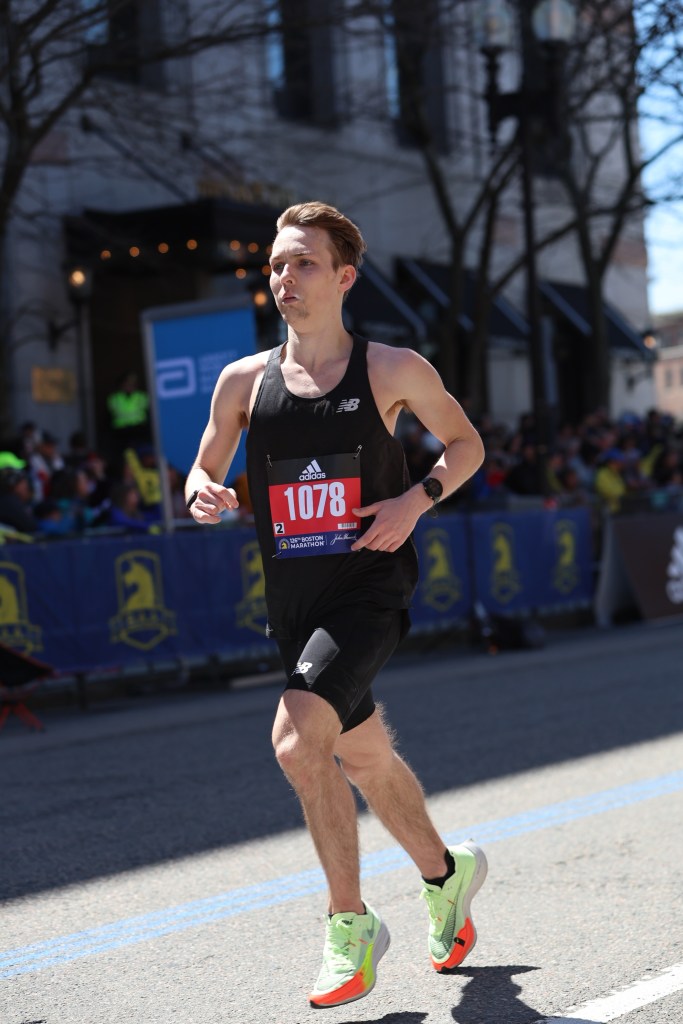
You pictured your race perfectly. Smooth miles, strong legs, crossing the finish line with a new PR. But race day came, and everything felt harder than expected. The pace felt too fast, your legs were heavy, and the race slipped away.
So does visualization actually work?
Yes, but only when you use it the right way. Visualization isn’t about imagining a perfect race. It’s about preparing your mind for the hard moments, and knowing exactly how you’ll respond when they arrive. Here’s how to use visualization to execute your next race with confidence.
Train Your Brain Before Race Day
Getting your mind ready for race day starts way before your race. You want to pay attention to your thoughts during your training. One tip is to get used to seeing race day paces in your everyday runs without panicking. If you never practice your race pace during training, you won’t be prepared for what it feels like on race day. The more you practice race pace, the more your body and mind get used to seeing and feeling that pace. The goal is to make race pace feel normal, not intimidating. Here’s how to prepare in training for race day:
- Practice race pace exposure
- Pair pace with calm self talk
- Use a mantra during race pace (such as “steady and strong”)
When race pace shows up in training, practice calm thinking: “This is familiar. I’ve done this before.”
Stop Visualizing a Perfect Race
Don’t make the mistake of visualizing a perfect race. Races hardly go as planned, and the magic of visualization comes when you picture something NOT going well on race day, and how you can handle it calmly and overcome it. You can prepare yourself better for race day by rehearsing the hard moments and knowing the course well.
Mentally Rehearse the Hard Moments
Instead of mentally rehearsing a perfect race, use visualization to practice rehearsing the hard moments. Think of moments that will be challenging and how you will overcome them. You want to rehearse how to stay calm and handle any challenges that come up during the race. Here’s a few examples:
- The moment the pace feels too hard at mile 20
- Your legs feeling heavy, but your form stays strong
- You missed taking a gel, but you calmly adjust
- The weather is bad, but you stay calm and controlled
- Your pace slips a bit, but you refocus and get back on track
Visualization works best when it includes challenge + response.
Know the Course Before You Run It
You can also prepare mentally for your race by previewing your race course. Run on parts of the course, or drive the course beforehand. Look at the race elevation charts, and know what kind of weather you will be running in. By preparing ahead, you will know what to expect on race day. This also helps with your race plan to know where to push the pace and where to hold back, and how to plan your fueling points.
Stay Mentally Locked In on Race Day
Now is the time to stay mentally focused and stick with your race plan. Sure, the distractions of the crowds and spectators can help push you along, but make sure you stay focused enough to stick to your race plan. Resist the urge to go fast at the beginning (when you are feeling fresh), and remind yourself to keep with the pace once fatigue sets in. Practice using mental tools such as:
- Focus cues for form, breathing, and cadence (“Relax the shoulders”)
- A short mantra (“I can do hard things”)
- Break the race into segments (“one mile at a time”)
Part of racing is staying focused on your goal and executing your race plan. Using these mental tools can help you stay on track.
The Real Power of Visualization
Visualization isn’t about imagining a perfect race, it’s about preparing for the imperfect one. When you mentally rehearse the hard moments during training and before race day, your mind already knows what to do when things get tough. Instead of reacting with panic, you respond with control. This can be the difference between falling apart or running a new PR. Do you have a favorite race day mantra?
Want the best running tips delivered right to your inbox? Subscribe below to get weekly training tips from our coaching team. Simple, actionable advice to help you run stronger, faster, and with more confidence.
 Fast Pack Running
Leave a comment