Three training principles that help runners close the gap to a BQ.
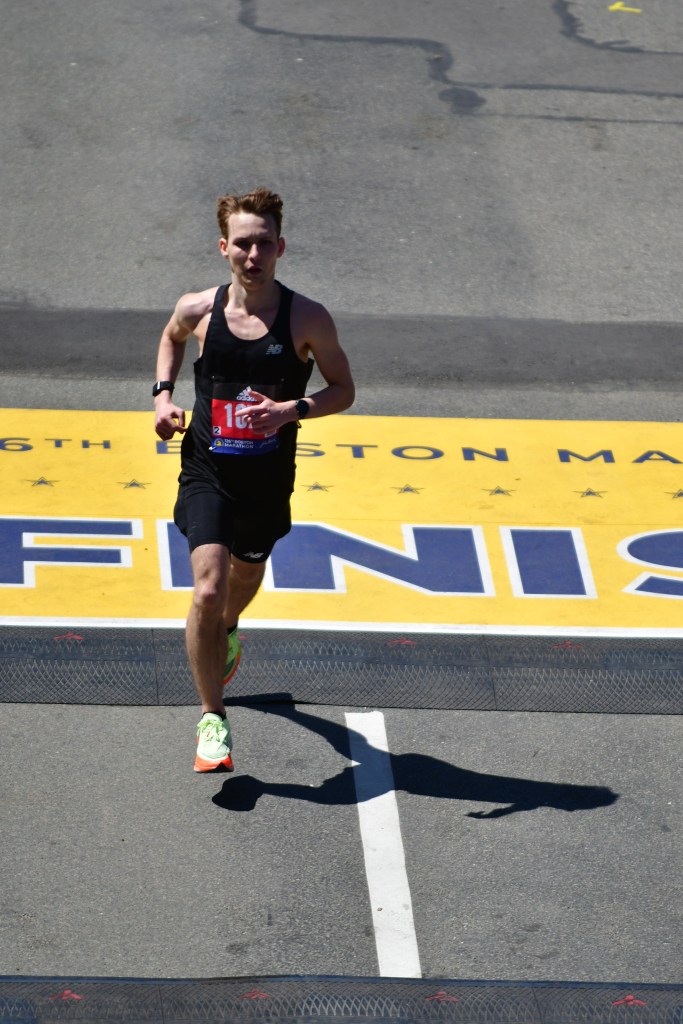
For many runners, qualifying for the Boston Marathon is the ultimate running goal.
The Boston Marathon isn’t just another race. It represents years of consistent training, discipline, and chasing a time standard that once seemed impossible.
Yet many runners believe a Boston Qualifier (BQ) is out of reach. They assume the standard is simply too fast. But for many amateur runners, qualifying for Boston is possible. It may take time, patience, and smart training, but with the right approach, runners can steadily close the gap to a qualifying time.
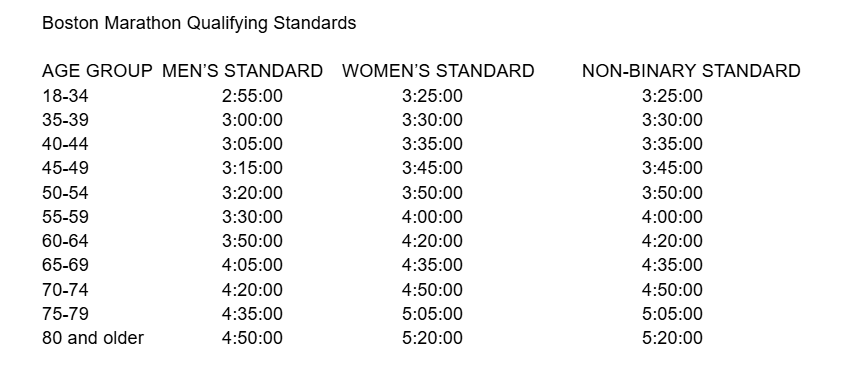
So what does it take? First, let’s look at the current (2027) standards.
Boston Marathon Qualifying Standards
How Close Are You to a Boston Qualifier?
Start by comparing your current marathon PR to your age-group standard.
Ask yourself:
- Are you within 5–10 minutes of the standard?
- Do you need to improve 15–30 minutes or more?
If you’re close, one strong training cycle could get you there. If the gap is bigger, the goal may require multiple training cycles focused on building fitness over time. Either way, the same training principles apply.
Consistency Beats Everything
Consistency is the most important factor in reaching a big goal like qualifying for Boston. Fitness adaptations take time. When runners train hard for one race and then take several months off, they lose much of the progress they built.
We often see runners follow a strong training block, run well, then stop running regularly afterward. When they start training again months later, they’re essentially rebuilding from scratch.
Consistency compounds fitness. Even during the off-season, maintain consistent running. A good long-term goal is running 4–6 days per week year-round, even when you are not preparing for a specific race. In fact, working on building your base during an off season is the perfect time to work on our next principle – volume.
Build Your Mileage Base
Most runners who qualify for Boston build their success on a strong mileage base. Everyone’s ideal training volume is different, but most runners improve as they gradually increase mileage — as long as they can stay healthy and recover well.
Higher mileage improves aerobic fitness and also prepares the body to handle harder workouts.Instead of chasing occasional big weeks, focus on steady mileage progression over months and years. Build to a weekly volume that fits both your body and your lifestyle.
Train With the Right Workouts
The marathon is an endurance event, so the long run remains the most important workout. Most marathon training plans should include several long runs between 16–22 miles. But long runs shouldn’t always be slow and easy.
Adding structured segments can better prepare you for race day. Examples include:
- Fast finish long run: 10 miles easy + 10 miles at marathon pace
- Mid-run marathon pace: 6 easy + 8 marathon pace + 4 easy
- Progression long run
In addition to long runs, well-rounded marathon training should include:
- Threshold / tempo workouts
- Speed intervals
- Plenty of easy mileage
These workouts build the aerobic strength and efficiency needed to run faster for 26.2 miles.
The Path to Your Boston Qualifier
Qualifying for Boston isn’t about one perfect training cycle. It’s about consistent training over time. With steady mileage, smart workouts, and patience, many runners can gradually close the gap between their current PR and the Boston qualifying standard.
For some runners it may take a year. For others it may take several seasons of development. But the process is the same: train consistently, stay healthy, and keep building fitness.
Need Help Chasing Your Boston Qualifier?
Want guidance every step of the way? At Fast Pack Running, we offer personalized one-on-one coaching designed to help runners reach their goals — whether that’s a new PR or qualifying for the Boston Marathon.
Learn more at our Training & Coaching Page.
Want the best running tips delivered right to your inbox? Subscribe below to get weekly training tips from our coaching team. Simple, actionable advice to help you run stronger, faster, and with more confidence.
 Fast Pack Running
Leave a comment