What to focus on after your goal race so you start your next training cycle stronger, healthier, and more prepared.

You just finished your goal race. After months of focused training, it’s finally done. Now what? After some well-earned downtime (we recommend at least 1–2 weeks, especially after a marathon), you enter what runners often call the “off-season.” It can feel like a strange in-between phase—too early to start your next training plan, but too important to waste.
If you’re aiming for a fall race, how you train this spring can make or break your next cycle. Here’s how to use your off-season to build fitness, stay healthy, and show up ready to train when summer begins.
Build Your Aerobic Base (Without Overdoing It)
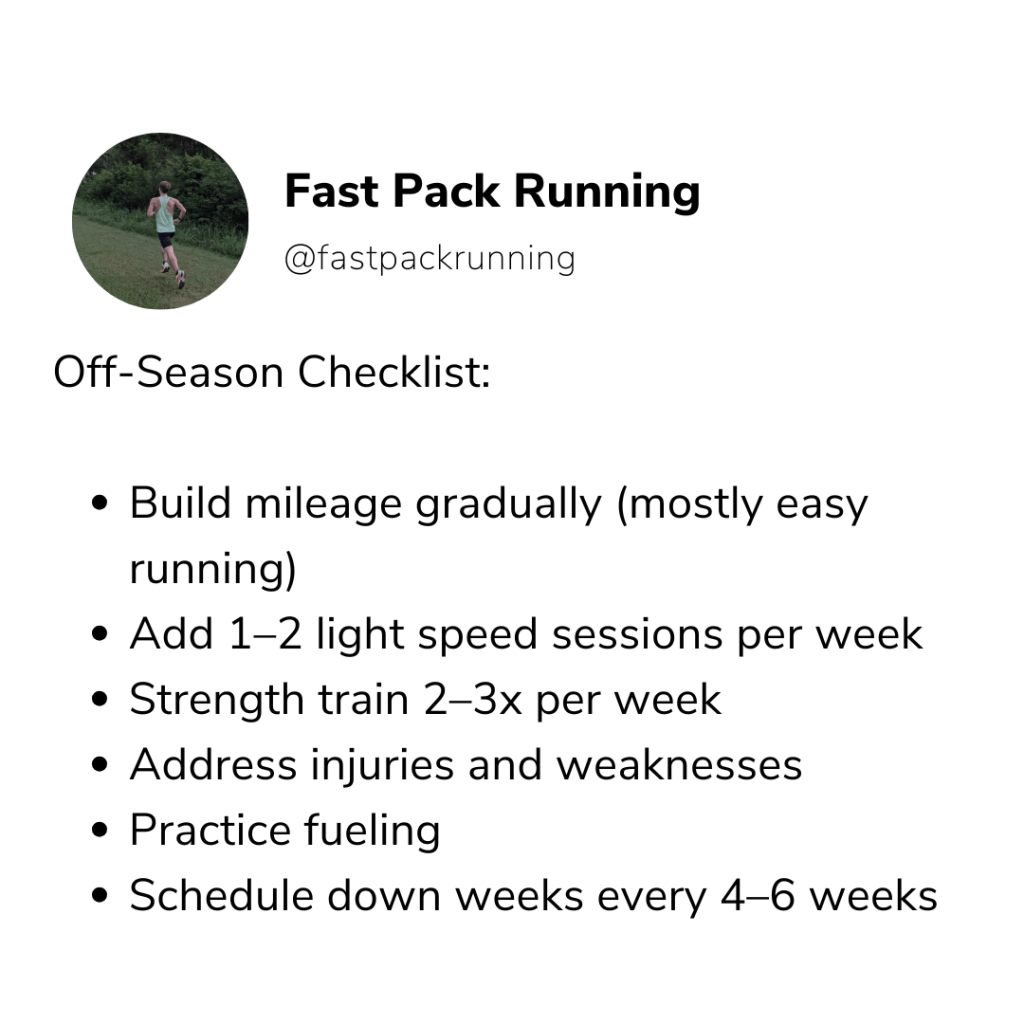
The off-season is the perfect time to gradually build your mileage base. This is where you develop your aerobic engine—the foundation for everything that comes later. Focus primarily on easy running. A good rule of thumb: most runs should feel conversational, not taxing. You can still include light speed work, but keep it minimal—1 to 2 workouts per week is plenty. Adding strides after easy runs is a great way to maintain leg turnover without adding fatigue.
Think of this phase as laying bricks. You’re not trying to peak—you’re building durability.
Add Strength Training That Actually Helps Your Running
If you’re not already strength training, this is one of the best times to start. Strength work improves running economy, builds power, and helps prevent injury—especially as mileage increases later.
Focus on:
- Compound lower body exercises (lunges, squats, deadlifts)
- Core and stability work
- Upper body strength for posture and efficiency
As a runner, your goal isn’t to bulk up, it’s to get stronger and more resilient. Stick to heavier weights with lower reps (3–6 reps per set). This builds strength without excessive fatigue, so it complements your running instead of interfering with it.
Address Weaknesses Before They Become Problems
The off-season is also your opportunity to hit reset. Ask yourself:
- What held me back last cycle?
- Did I struggle with endurance, speed, or consistency?
- Am I dealing with any lingering aches or injuries?
Addressing these now—before structured training begins—can make a huge difference later. This might mean dialing back mileage, adding mobility work, or finally committing to rehab exercises you’ve been putting off.
Dial in Your Nutrition for Better Performance
This is also a great time to evaluate your nutrition. Make sure you’re eating enough to support your training, even if intensity is lower. Focus on nutrient-dense, whole foods that help with recovery and energy levels. You can also use this time to practice fueling during runs—especially if you struggled with this in your last race.
Getting comfortable with fueling now removes a major stressor later.
Balance Work and Recovery
It’s easy to feel motivated and want to do everything during the off-season—but more isn’t always better. The goal is to build yourself up, not burn yourself out before your training cycle even begins. One of the best habits you can build is scheduling a down week every 4–6 weeks. Reduce mileage and intensity to give your body time to absorb the work.
Progress comes from the balance between stress and recovery—not just piling on more miles.
Set Yourself Up for Your Next Training Cycle
If you’re not sure how to structure your off-season, having a simple plan can make all the difference. We offer free base training plans and weekly training resources to help guide you through this phase. If you’re looking for more personalized support, our custom coaching plans are designed to fit your goals and lifestyle.
👉 Explore your options here: Training Plans & Coaching
 Fast Pack Running
Leave a comment