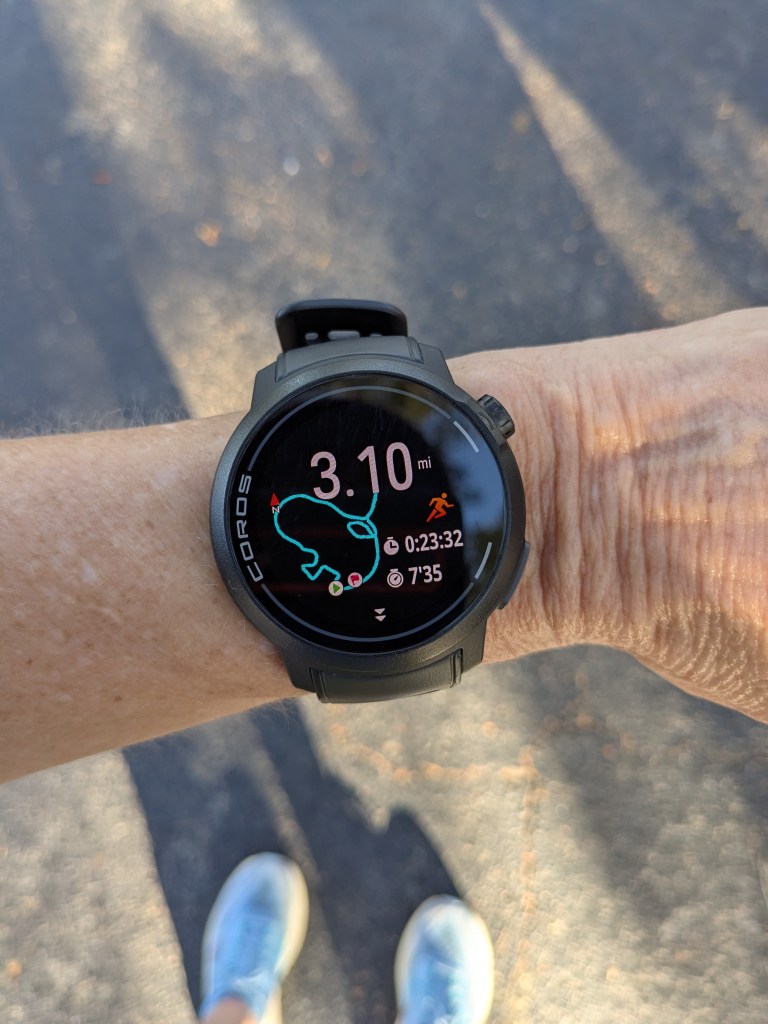
Are you stuck at the same time for your marathon?
If you’ve been training for a while, gone through several training cycles, and still come up short on race day, you could be leaving fitness gains in your training. One of the biggest mistakes runners make is running their training paces too fast. It’s tempting to train at the paces that correspond with your goal marathon time, but if you want to improve, your training needs to reflect your current fitness.
That can feel counterintuitive at first. Many runners assume that if they want to run a faster marathon, they should spend most of their training running faster. But endurance training doesn’t work that way. Different paces create different physiological adaptations, and when every run turns into a moderate-hard effort, you may actually reduce the effectiveness of your training.
Instead of building fitness layer by layer, runners often end up stuck in the “gray zone.” They end up running their easy days too hard and their hard days not hard enough. Over time, this can lead to accumulated fatigue, inconsistent workouts, poor recovery, plateaued race performances, or even injury.
The good news is that training smarter can unlock another level of performance.
Why Different Training Paces Matter
Your body uses different energy systems depending on how fast you run. Each training pace targets a different aspect of endurance performance, and together they build the complete aerobic engine needed for marathon success.
Think of marathon fitness like building a house. Easy runs form the foundation. Threshold and CV work build the structure. VO2 max training sharpens the top end. Marathon pace work ties everything together specifically for race day. When one system is overemphasized (or neglected entirely), progress can stall.
Many runners unknowingly spend most of their training in a “moderately hard” effort because it feels productive. But running slightly too fast on easy days can compromise recovery and reduce the quality of harder workouts later in the week.
The result? You’re working hard, but not necessarily getting the full benefit from your training.
Training at Current Fitness vs. Goal Fitness
This is one of the hardest mindset shifts for experienced runners. If your goal is a 3:30 marathon, it’s natural to want your workouts to reflect 3:30 pace. But if your current fitness aligns more closely with 3:45 fitness, forcing every workout at 3:30 paces often leads to burnout, failed workouts, or inconsistent training.
Fitness is built progressively. When you consistently train at paces your body can properly adapt to, your fitness improves naturally — and your training paces evolve with it over time. Ironically, runners often reach goal pace faster when they stop trying to force it too early.
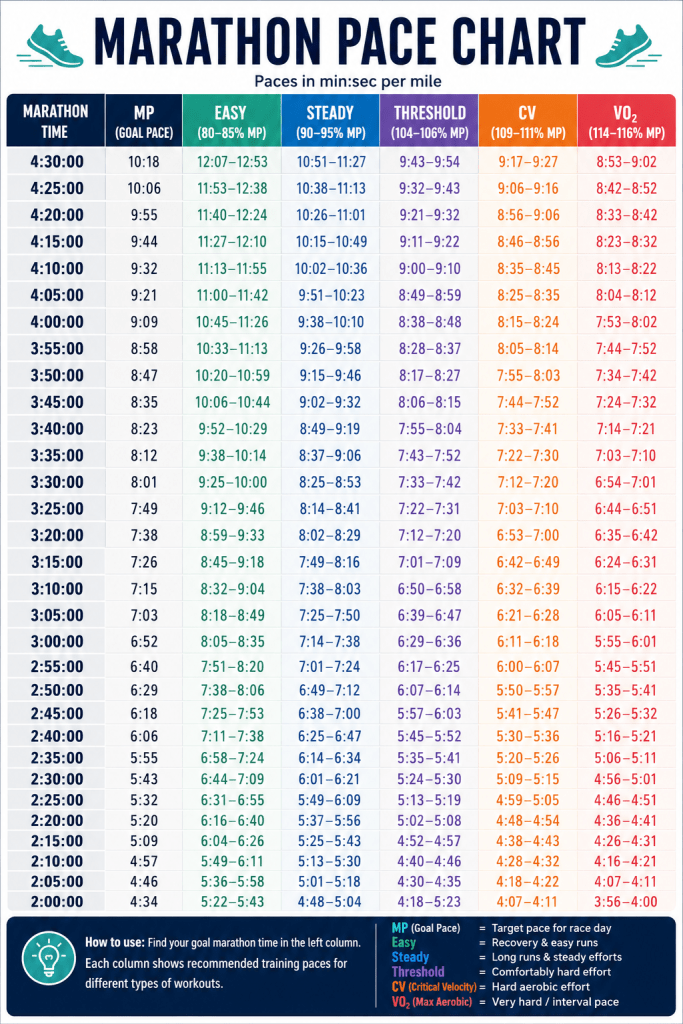
The marathon pace chart below is designed to help runners train at the right intensities for their current fitness level so they can maximize adaptation, recover properly, and ultimately race faster. Find your current marathon pace, and read below to find out how to add the correct paces to your training.
How to Use Each Pace in Your Training
Marathon Pace (MP)
Marathon pace work helps your body become more efficient and comfortable at race pace. These workouts improve fuel utilization, muscular endurance, and pacing confidence.
Marathon pace is commonly used in:
- Long continuous tempo runs
- Fast-finish long runs
- Long marathon pace intervals such as 2–6 miles at MP
For newer marathoners, marathon pace can feel surprisingly controlled early in training. For experienced runners, marathon pace workouts often become more mentally demanding as volume increases and fatigue accumulates.
The goal is not to “race” marathon pace workouts. The goal is to practice efficiency and rhythm while staying controlled.
Easy Pace
Easy running is the foundation of marathon training. This pace develops the aerobic system, improves capillary density, strengthens connective tissue, and builds endurance while allowing recovery between harder sessions. Easy pace should feel conversational. You should be able to speak in complete sentences without struggling for breath.
This is where many runners sabotage progress. Running easy days too fast may make you feel fitter in the short term, but it often creates lingering fatigue that impacts workout quality and long-term consistency. For intermediate runners especially, slowing down easy runs is frequently one of the fastest ways to improve overall performance. Easy miles are not junk miles. They are what allow you to absorb the harder training.
Steady Pace
Steady running sits between easy pace and threshold pace. This is moderate aerobic running, often associated with Zone 3 effort. Steady runs are particularly useful during marathon preparation because they teach the body to sustain moderate efforts efficiently without the stress of harder threshold work.
These runs are often incorporated into:
- Long runs
- Medium-long runs
- Aerobic progression runs
Steady running builds durability and fatigue resistance, both critical for the later stages of the marathon.However, this pace should still feel controlled. If steady pace turns into threshold effort, the purpose of the workout changes entirely.
Threshold Pace
Threshold pace is often described as the pace where lactate accumulation begins to outpace lactate clearance. In simpler terms, it’s the fastest pace you can sustain while remaining aerobically controlled. For many runners, this corresponds roughly to one-hour race pace. Threshold workouts improve your lactate clearance, stamina, and running economy.
Common threshold workouts include:
- Tempo Runs
- Cruise Intervals
- Long intervals with short recoveries
Threshold training is especially valuable for marathoners because it raises the ceiling of what feels sustainable. As threshold fitness improves, marathon pace begins to feel easier relative to your overall fitness. This is one reason many marathon plans include substantial tempo work even though the marathon itself is run slower than threshold pace.
Critical Velocity (CV)
Critical Velocity falls between threshold pace and VO2 max pace. It’s a powerful but often overlooked training zone. CV pace is typically sustainable for about 30–40 minutes in a race setting and helps improve the ability to maintain high aerobic power for longer durations. Compared to threshold pace, CV work is slightly faster and more oxygen-demanding, but generally less taxing than VO2 max intervals.
Examples include:
- 1K Repeats
- Mile Repeats
- Moderate intervals with short recoveries
CV training can be particularly effective for intermediate runners who have already developed a solid aerobic base and want to improve stamina at faster paces without excessive anaerobic stress.
VO2 Max Pace
VO2 max workouts target maximal aerobic capacity and are usually performed around 3K–5K race pace. These workouts improve your aerobic power, speed endurance, and running economy at faster speeds.
Typical VO2 max workouts include:
- 400m to 1200m repeats
- Hill Repeats
- Shorter, faster repetitions with recovery jogs
For marathon runners, VO2 max work is not about becoming a sprinter. It helps raise your aerobic ceiling so that marathon pace becomes a smaller percentage of your maximum capacity. However, more is not always better here. VO2 max workouts are highly demanding and should be balanced carefully with recovery and aerobic development.
The Bigger Picture: Training Is About Balance
One workout rarely makes a marathon build successful. Instead, marathon fitness is built through weeks and months of consistent, appropriately paced training layered together over time.
The runners who improve the most are often not the ones crushing every workout. They’re the runners who:
- Stay healthy
- Recover well
- Train consistently
- Execute workouts at the correct intensity
- Build fitness progressively over multiple cycles
Sometimes the smartest thing you can do for your marathon is slow down.
How to Use the Marathon Pace Chart
Use the chart to identify the training paces that align with your current marathon fitness — not just your goal time. As fitness improves throughout a training cycle, your paces may naturally shift. Reassessing every few weeks based on workouts, race results, or long-run performance can help keep training appropriately targeted.
Remember:
- Easy runs should feel easy
- Hard workouts should have purpose
- Marathon training is cumulative
- Consistency matters more than forcing paces
When your training paces match your current fitness, you give your body the best opportunity to adapt, recover, and ultimately perform at a higher level on race day.
Race Day Success
A good training plan isn’t just about working hard. You want to apply the right stress at the right time. When your training paces align with your current fitness, your body can adapt more effectively, recover more efficiently, and build the specific endurance needed for race day success. Over time, those small improvements compound into meaningful breakthroughs. The key is consistency, patience, and having a plan that evolves as your fitness evolves.
At Fast Pack Running, we build training programs around your current fitness, goals, experience level, and lifestyle. Whether you’re chasing your first marathon finish, trying to break through a plateau, or aiming for a major PR, personalized coaching can help you train smarter, stay healthy, and get the most out of every mile. Learn more about our Custom Training Plans and Coaching.


Leave a Reply