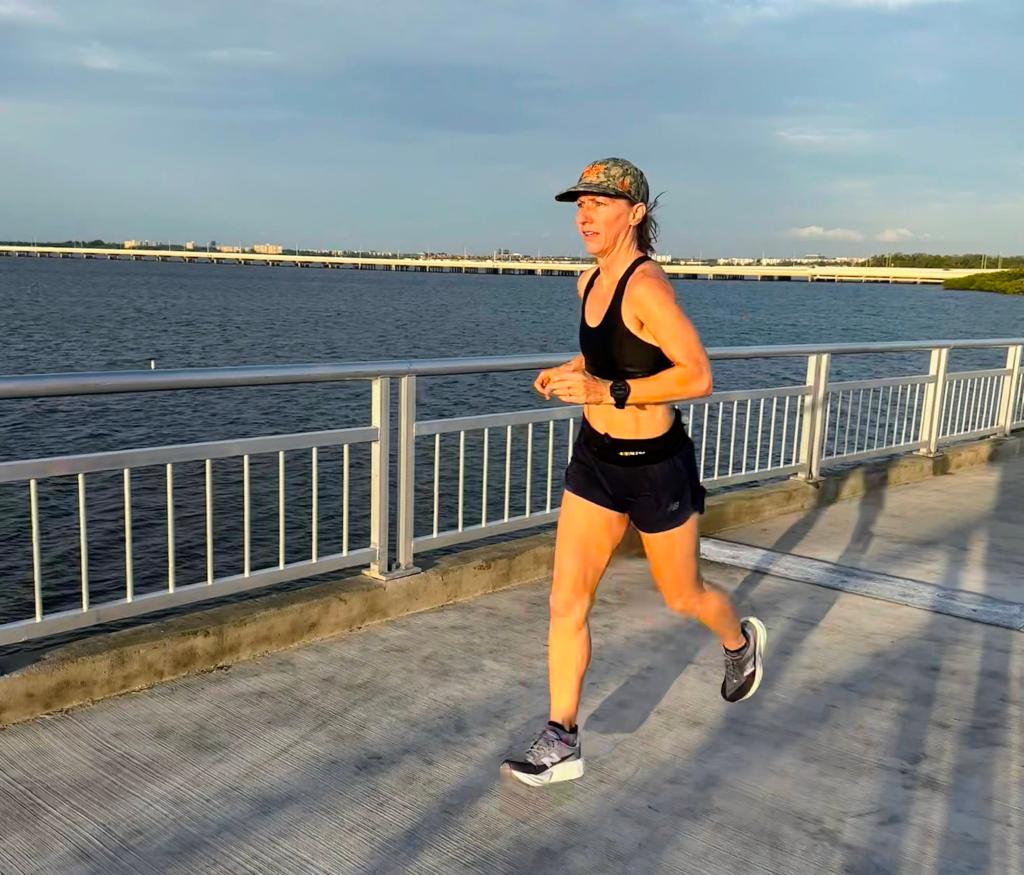
It’s a common experience for many runners. Summer heat reaches its peak, and day-to-day runs become a struggle. Paces that once felt comfortable are suddenly out of reach, and you find yourself grinding through the same workout at much slower speeds. It’s easy to become frustrated and start questioning your fitness, but here is what really is happening.
Why Running Feels Harder in the Heat
High temperatures can have a huge impact on running performance, and the effect becomes even greater when combined with high humidity. More blood is diverted to the skin to help cool the body, meaning the working muscles receive less oxygen-rich blood than they normally would.
High humidity also reduces the effectiveness of your body’s natural cooling system. Since we cool ourselves through the evaporation of sweat, humid air makes it harder for sweat to evaporate, trapping more heat in the body and causing your core temperature to rise faster.
Four Ways to Run Smarter in Hot Weather
So what can you do? While it’s impossible to run the same paces in extreme heat that you can in ideal conditions, there are several ways to make your training safer and more productive.
Pre-cooling: A cold shower or even a brief ice bath before running may help lower your starting body temperature, giving you a little more time before heat begins to significantly impact performance.
Hydration: Stay hydrated before, during, and after your run. Dehydration reduces blood plasma volume, forcing your heart to work harder and accelerating the decline in performance that comes with running in the heat.
Electrolytes: Replace the sodium and other electrolytes lost through sweat after your run. Consistently replenishing electrolytes helps you recover more effectively and prepares you for your next workout. If you are consistently not replenishing electrolytes, you may find yourself struggling more on each run and notice declining performance.
Adjust your expectations and paces: This is probably the biggest one. Trying to hit the same splits you run in cool weather often leads to excessive fatigue, shortened workouts, and frustration. Remember, your body responds to effort, not the pace displayed on your watch.
Use the Misery Index to Adjust Paces
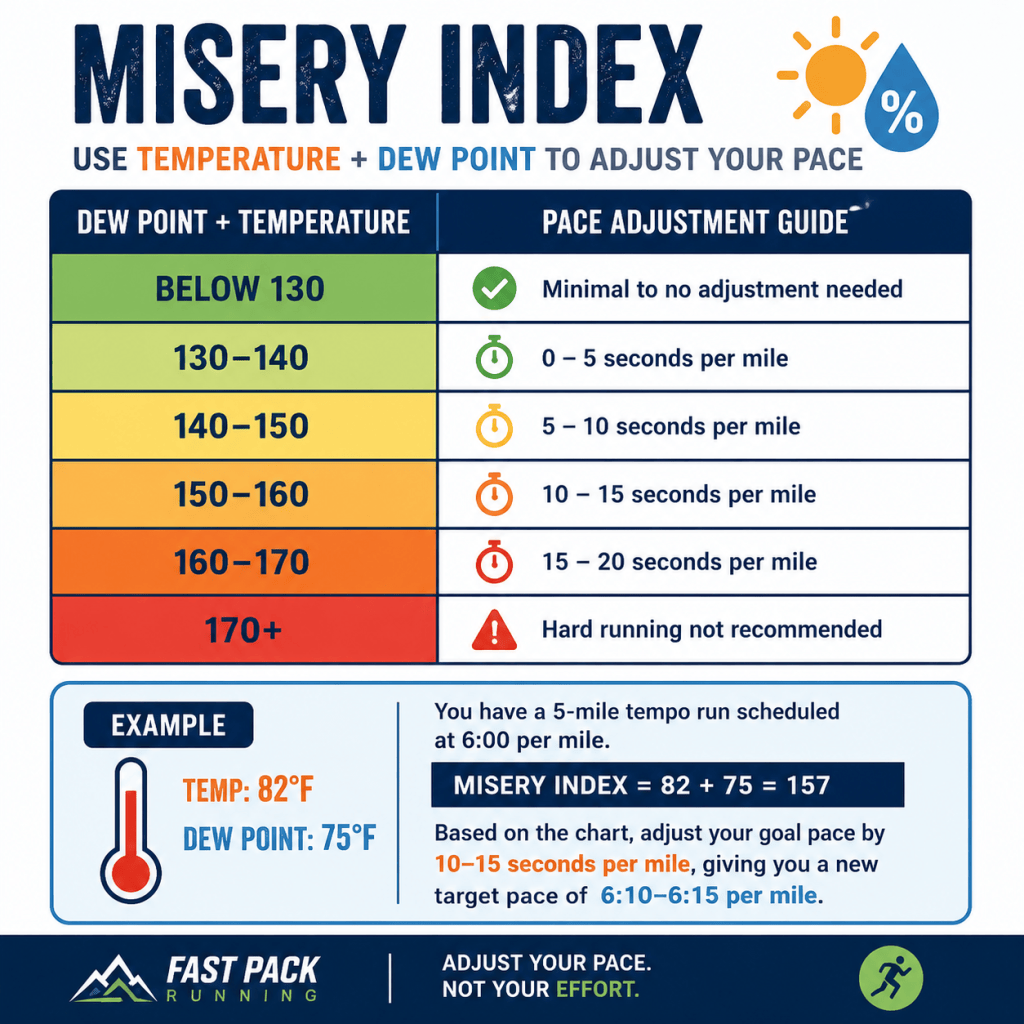
A useful guideline is the combined temperature and dew point, often referred to as the “Misery Index.” The higher the combined number, the greater the impact the heat and humidity will have on performance.
Remember that these are only general guidelines. Everyone responds differently to heat, and factors such as fitness level, acclimatization, hydration status, and even the workout itself can influence how much you need to slow down.
| Dew Point + Temperature | Pace Adjustment |
| Below 130 | Minimal to no adjustment needed |
| 130-140 | 0 – 5 seconds per mile |
| 140-150 | 5 – 10 seconds per mile |
| 150-160 | 10 – 15 seconds per mile |
| 160-170 | 15 – 20 seconds per mile |
| 170+ | Hard running not recommended |
For example, suppose you have a 5-mile tempo run scheduled at 6:00 per mile. If it’s 82°F with a dew point of 75°F, your Misery Index is 157 (82 + 75). Based on the chart, you’d adjust your goal pace by approximately 10–15 seconds per mile, giving you a new target pace of 6:10-6:15 per mile.
The Heat Is Still Making You Stronger
Training in the heat is never easy, and slower paces don’t mean you’re losing fitness. In fact, when you make the appropriate adjustments, you’re still building the aerobic fitness needed for strong fall races. Consistent heat training also leads to physiological adaptations such as increased blood plasma volume, earlier and more efficient sweating, and improved tolerance to hot conditions. Trust the process, focus on effort instead of pace, and remember that cooler weather will eventually return, often revealing fitness that was being hidden by the summer heat.


Leave a Reply